
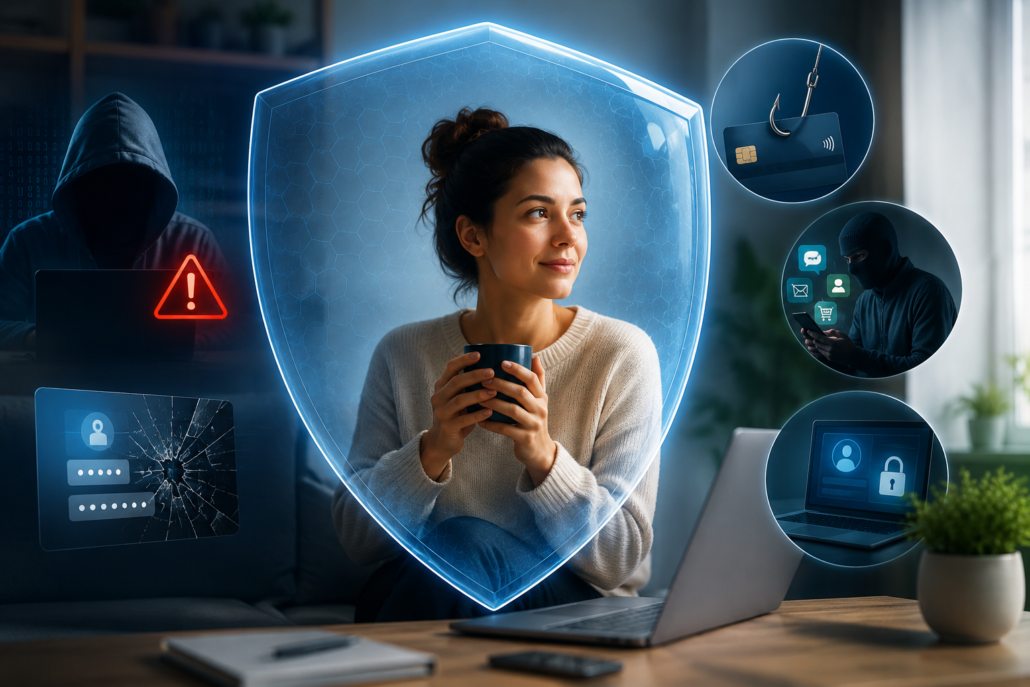
Personal Cyber Insurance: Why Individuals Need Their Own Coverage in 2026
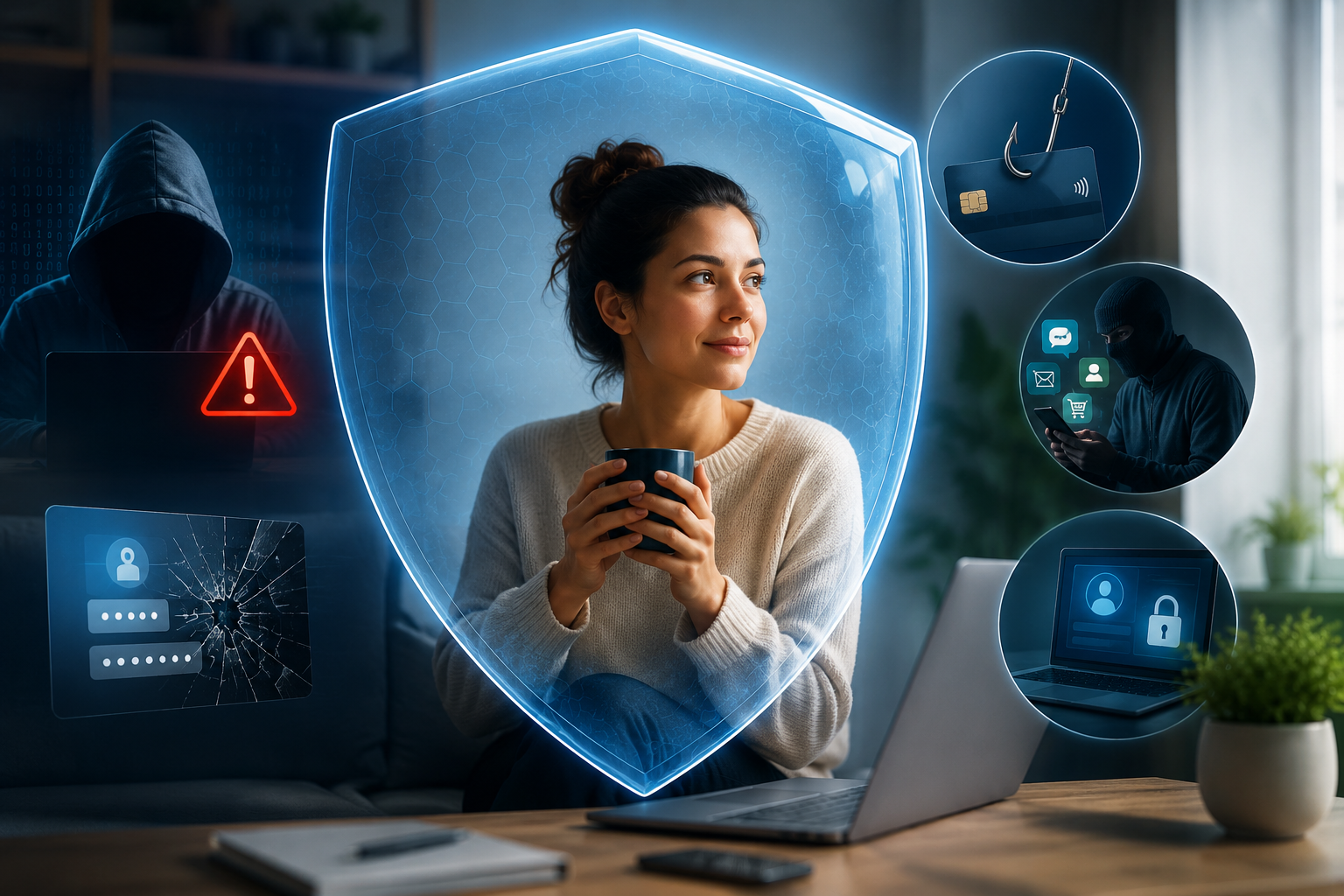
Your homeowners’ policy won’t cover a hacked bank account. Here’s what will.
Most people assume their identity, their accounts, and their devices are someone else’s problem to secure. Until a fraudulent wire transfer drains a savings account or a stolen identity torpedoes a credit score. Businesses have carried cyber insurance for years. Individuals, largely, have not. That gap is closing fast, and for good reason: personal cyber insurance is quickly becoming one of the most overlooked essentials in a household’s financial protection plan.
We’re seeing a clear shift in what clients ask for. It’s no longer just “do I have enough life insurance” or “is my home properly covered.” It’s “what happens if someone gets into my email, my bank account, or my kid’s social media profile?”
To help avoid any confusion, we want to break down what personal cyber insurance actually covers. We also want you to understand why it matters more in 2026 than it did even two years ago, and how to know if you need it.
The Risk Individuals Actually Face
Cybercriminals have realized that individuals are often easier targets than corporations. Personal devices rarely have enterprise-grade security, and people reuse passwords, click on convincing phishing links, and connect to public Wi-Fi without a second thought. The result is a steady rise in identity theft, account takeovers, romance scams, ransomware attacks on home networks, and cyberbullying incidents affecting children and teens.
According to industry surveys, cybersecurity has climbed to the top of the list of concerns for households and high-net-worth families worldwide, ranking above healthcare and natural disasters in some reports. Yet despite that anxiety, only a small fraction of people currently hold a personal cyber policy. Awareness of the risk has outpaced adoption of the protection.
That gap matters because the financial and emotional fallout from a cyber incident can be significant. Recovering a stolen identity can take months and thousands of dollars in legal and administrative costs. A compromised bank account can mean an immediate, uninsured loss. And unlike a house fire or a car accident, a cyberattack often leaves no clear physical trail, making it harder to prove, harder to reverse, and harder to plan for without dedicated coverage.
What Personal Cyber Insurance Actually Covers
Personal cyber insurance is designed to fill the gap that homeowners, renters, and auto policies simply don’t address. While the exact coverage varies by provider, a solid personal cyber policy typically includes protection for:
Identity theft recovery, including the cost of restoring your credit, legal fees, and lost wages while you sort out the damage. Cyber extortion and ransomware, covering the financial impact if a hacker locks your files or devices and demands payment. Fraud and hacked accounts, reimbursing losses from unauthorized transactions or account takeovers. Cyberbullying and online harassment response, an increasingly requested feature for families with children and teenagers online. Device and smart-home protection, extending coverage to the growing number of connected devices in modern households, from smart doorbells to home security systems.
Beyond the financial reimbursement, many of the stronger policies on the market now bundle in proactive protection tools: password managers, VPN access, dark web monitoring, and 24/7 incident response teams that can step in the moment something goes wrong. That combination of insurance plus prevention is where the category is heading, and it’s a meaningful upgrade from older identity-theft-only products.
Who Actually Needs It
The short answer is almost everyone. However, for some people, it’s less of a nice-to-have and more of a necessity.
- Families with school-age children: Social media, gaming platforms, and online learning increase the risk of cyberbullying, account takeovers, and scams targeting young users.
- Remote workers and freelancers: Using personal devices to access or store client information can create exposures that a standard homeowners policy was never designed to cover.
- High-net-worth individuals: Cybercriminals often target those with greater assets because successful attacks can result in larger financial gains.
- People managing investments or business interests online: The more of your financial life that exists online, the more attractive you become to cybercriminals.
- Anyone who uses the internet: If you’ve ever reused a password, clicked a suspicious link, shopped online, or connected to public Wi-Fi, you’ve likely been exposed to common cyber risks.
Ultimately, personal cyber insurance isn’t about expecting the worst. It’s about ensuring that one mistake, or someone else’s criminal act, doesn’t become a costly financial setback.
What It Costs, and What To Look For
Entry-level personal cyber policies are more accessible than people expect, often starting in the low hundreds of dollars per year, with more comprehensive tiers scaling up based on coverage limits and the services included.
When comparing policies, don’t focus solely on the premium. Instead, consider:
- Claims support – Is there a dedicated cyber incident response team available when you need help, or are you simply calling a generic claims centre?
- Coverage breadth – Does the policy protect against identity theft, account fraud, cyber extortion, cyberbullying, and other common online threats?
- Preventative tools – Are cybersecurity features such as monitoring, threat detection, password protection, or security software included, or are they optional add-ons?
- Recovery assistance – Will the insurer help restore compromised accounts, recover lost data, and guide you through the recovery process after an attack?
The best personal cyber insurance policies don’t just help you recover after an incident; they also provide tools and expertise to reduce the chances of one happening in the first place.
As you compare your options, you’ll likely notice that not all personal cyber insurance policies are created equal. Some providers combine financial protection with proactive cybersecurity tools and 24/7 incident response, offering support before, during, and after an attack. Looking at offerings like these alongside your existing homeowners or umbrella policy can help identify any gaps in your current protection.
Before You Buy: Personal Cyber Insurance, Answered
Is personal cyber insurance the same as identity theft protection? Not quite. Identity theft protection typically just monitors for suspicious activity. Personal cyber insurance goes further, reimbursing you for financial losses and covering legal fees, lost wages, and recovery costs after an incident.
Does my homeowners or renters policy already cover this? Usually not, or only in a very limited way. Most homeowners and renters policies exclude cyber-related losses like account takeovers, extortion, and online fraud, which is exactly the gap personal cyber insurance is built to close.
What does a personal cyber insurance claim actually look like? It varies by provider, but a strong policy connects you with an incident response team the moment something happens, then reimburses covered losses like stolen funds, legal costs, or credit restoration once the claim is processed.
Is it worth it if I already use a password manager and antivirus software? Yes. Security tools reduce your risk, but they don’t cover you financially if an attack still gets through. Personal cyber insurance is the backstop for the moment prevention fails.
How much coverage do I actually need? It depends on your household: whether you have children active online, manage significant finances digitally, or work remotely with sensitive data. A quick review with your advisor can pinpoint the right coverage limit for your situation.
The Takeaway
Cyber risk isn’t hypothetical anymore, and it isn’t just a business problem. It’s a household problem, sitting quietly in the same category as fire, theft, and liability, except most people haven’t insured against it yet. As identity theft, scams, and account takeovers continue to climb, personal cyber insurance is shifting from a nice-to-have to a standard part of a well-rounded protection plan.
If you’re not sure whether your current policies leave you exposed, that’s exactly the kind of gap worth reviewing before an incident forces the question.
Talk to us about where personal cyber coverage fits into your overall plan.