
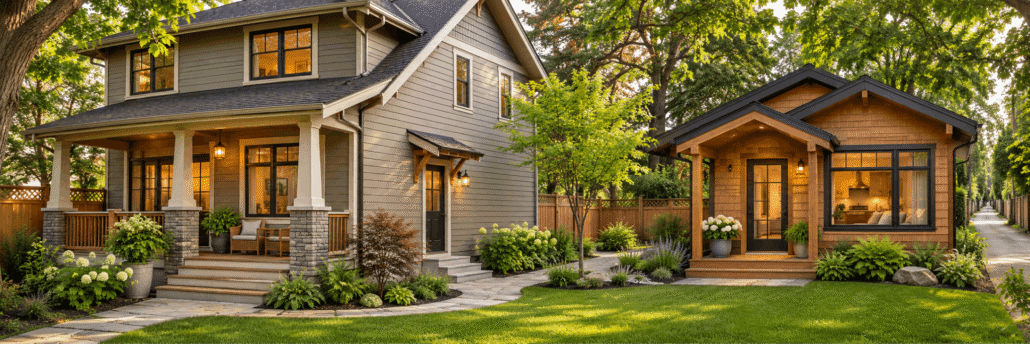
Insurance for Secondary Suites, Laneway Homes and Garden Suites in BC
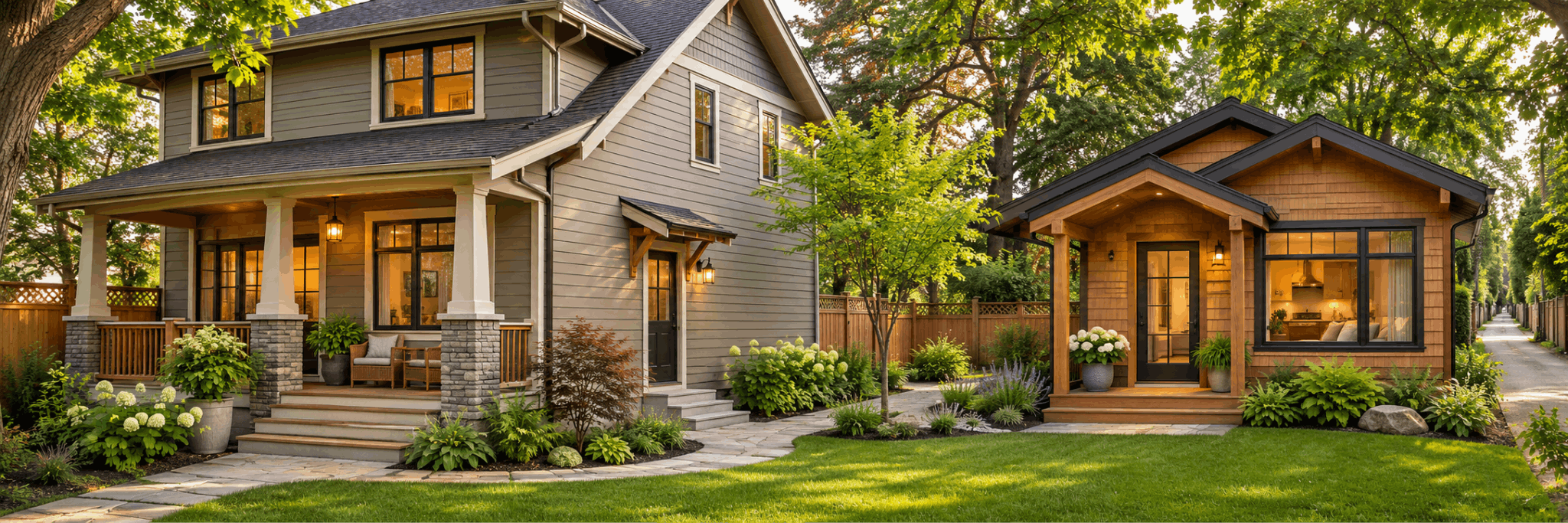
How secondary suite insurance works in BC. What to sort out before a tenant or family member moves in.
If your BC property has a secondary suite, laneway home or garden suite, don’t assume your standard home policy covers it properly. Tell your insurer or broker in writing before anyone moves in, then add the right coverage for that unit. That might be an addition to your home policy or a separate policy, depending on the building and who lives there.
Why a second dwelling changes your home insurance
Under BC’s Insurance Act, property policies include a statutory condition on material change in risk. You must promptly give written notice of a change that is material to the risk and within your control and knowledge. Adding a household to your property usually qualifies.
The Insurance Bureau of Canada (IBC) says renting out a basement or room changes your risk profile. It recommends telling your insurer before the change and keeping a written record, because not disclosing can void your policy. IBC also points out that a standard home policy covers liability for you, your spouse and your dependents, but not your tenants’ belongings or their liability.
These units are becoming more common. Provincial small-scale housing rules now allow secondary suites and/or accessory dwelling units in single-family zones across BC. Kelowna adopted its zoning amendments on March 18, 2024. Trail’s Zoning Bylaw No. 2503 separates secondary suites (inside the main building) from accessory suites (in a separate building, such as garden suites, laneway homes and carriage houses).
Suite, laneway home or garden suite: how each is usually insured
The type of unit affects how insurers look at it. Use this table as a starting point for the conversation with your broker, not as a final answer. Policy wording varies.
| Unit type | What it is | How it’s often insured | Ask your broker |
| Secondary suite (basement or in-house) | A self-contained unit inside the main home | Disclosed on your home policy, often with coverage added for the rented portion | Is my home now rated as a two-family dwelling? Is lost rental income covered? |
| Laneway home / carriage house | A detached dwelling, often off a lane or above a garage | Its own dwelling limit, either on your home policy or as a separate policy | Is it insured as a dwelling or only as a “detached structure”? What’s the rebuild cost? |
| Garden suite | A detached unit in the backyard | Similar to a laneway home | Does the limit reflect a finished home with a kitchen and bathroom, not a shed? |
Our own home insurance page notes that rented dwellings are usually insured as a second location under the main home policy, and sometimes as a stand-alone policy. Coverage is usually more limited than a homeowners policy.
The overlooked gap: detached structure limits
Many home policies include some coverage for detached buildings, often set as a percentage of the main home’s limit. That’s meant for garages and sheds. A finished laneway home or garden suite can cost far more to rebuild than that percentage allows.
A separate policy can solve the limit problem, but it has tradeoffs. With some insurers, a loss affecting both buildings means two deductibles. Ask how each option would handle a fire that spreads from one building to the other.
Who lives there matters as much as the building
- Long-term tenant: Ask about landlord coverages. IBC notes these can include lost rental income if the unit becomes unlivable after an insured loss, and legal defence if a tenant or guest sues you.
- Family member, rent-free: Still tell your insurer. Ask whether that person counts as part of your household under the policy, or needs their own insurance.
- Short-term or vacation rental: Our home insurance page warns that renting through Airbnb or similar platforms without the right coverage could void your entire policy. This needs its own conversation.
- Empty between tenants: Standard home policies often exclude vacant properties. Let us know if a unit will sit empty.
Checklist: what to have ready before you call
- Unit type, size and year built (or planned completion date)
- Permit and registration status with your city
- Separate entrance, heating, smoke and carbon monoxide alarms
- Who will live there: tenant, family, short-term guests, or no one yet
- Monthly rent and lease start date
- Whether you live on the property
- A rough rebuild cost for a detached unit (your builder’s quote helps)
- Your tenant’s insurance details. IBC recommends requiring tenant insurance and asking for proof every year.
When coverage is confirmed, get it in writing and keep it with your lease.
What if my suite isn’t permitted?
Don’t hide it from your insurer. An unreported suite can create a much bigger problem at claim time than the conversation you’re avoiding. Insurer options for unpermitted units can be limited, so talk to a broker about what’s available. Then contact your city’s planning or building department about the steps to bring the unit into compliance.
Before You Choose
Does my home insurance cover my basement suite automatically? Not necessarily. Coverage depends on your policy and on whether your insurer knows about the suite. Disclose it in writing and confirm what’s covered.
Do I need a separate policy for a laneway home or garden suite? Not always. Some insurers add it to your home policy with its own limit, while others write it separately. The right choice depends on the rebuild cost, how the unit is used and how deductibles would apply.
Should my tenant have their own insurance? Yes. Your policy won’t cover their belongings or their personal liability. Tenant insurance protects them and helps make it clear what your policy does and doesn’t cover.
Will adding a suite raise my premium? Often it changes, because the risk has changed. How much depends on the insurer, the unit and its use, so it’s worth getting a quote before you sign a lease.
I’m building a carriage house. When should I call? Before construction starts. Ask how the project is covered while it’s being built, and again when it’s finished and occupied.
Talk to our Kelowna or Trail team
Working Ventures is a BC brokerage, and we work with several markets for rental and secondary dwelling coverage. If you have a suite, a laneway home or a garden suite, or you’re planning one, we’ll review your current policy and explain your options.
- Kelowna: 156-1876 Cooper Road · (250) 860-6700 · 1-800-663-4200 · kelowna@wvins.ca
- Trail: 1403 Bay Ave · (250) 368-9188 · 1-866-891-4997 · trail@wvins.ca